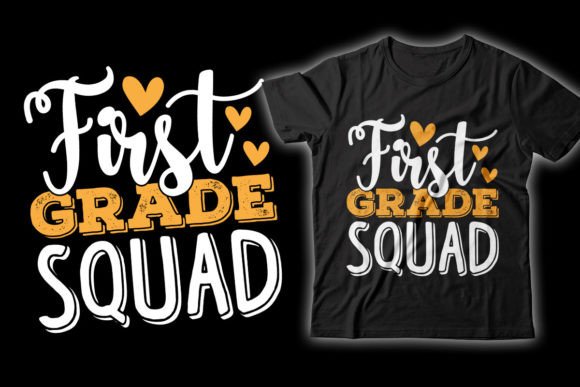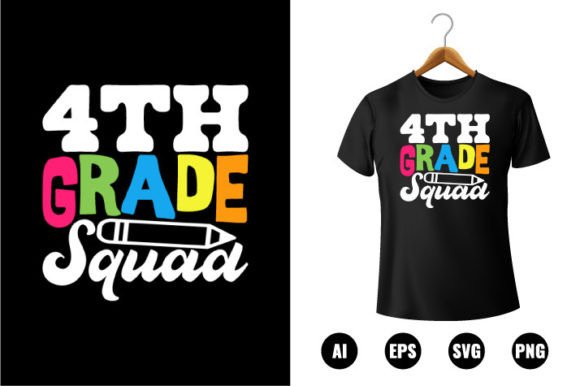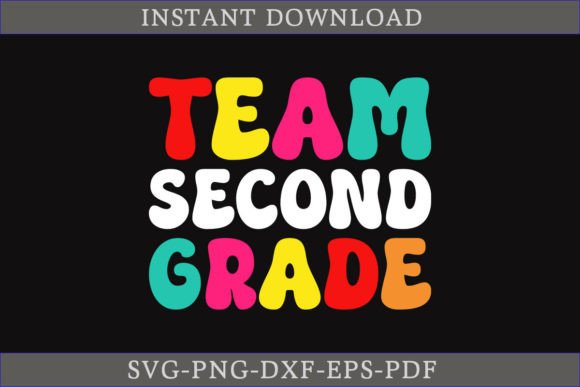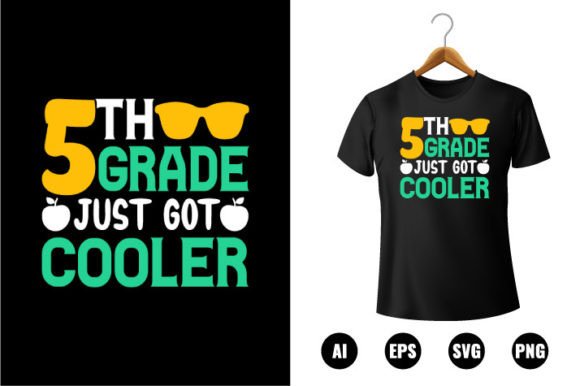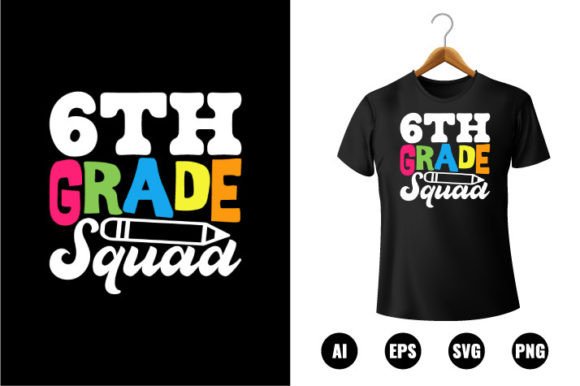
6th Grade Squad T-shirt Design
A well-executed 6th Grade Squad T-shirt Design isn’t just playful clip art—it’s a versatile, production-ready asset with measurable utility across creative, educational, and commercial workflows. For entrepreneurs launching back-to-school merch lines, educators building classroom community, or freelancers delivering print-ready assets to clients, this design delivers strategic leverage far beyond its surface-level theme. Its value lies not in novelty alone, but in how thoughtfully it integrates into real-world execution: from scalable branding systems to time-sensitive seasonal campaigns.
Why This Design Fits Real Operational Needs
Back-to-school is one of the most predictable—and competitive—seasonal demand windows for apparel, stickers, and classroom décor. A 6th Grade Squad T-shirt Design meets that moment with precision: it speaks directly to a developmental milestone (the transition to middle school), resonates emotionally with students and families, and carries built-in shareability for social proof and peer-driven adoption. But more importantly, its technical specifications—AI, EPS, PNG, SVG formats; 300 DPI resolution; vector-based scalability; color-changeable layers; Illustrator CC compatibility—mean it doesn’t stall momentum. You’re not waiting for revisions or chasing resolution fixes. You’re executing.
Consider a small business owner producing custom t-shirts for local PTA groups. With this file set, they can quickly adapt colors to match school spirit palettes, resize flawlessly for toddler-sized onesies or adult crewnecks, and export clean raster files for heat-transfer vinyl or DTG printing—all without outsourcing or licensing fees. That’s not convenience. That’s operational resilience.
Strategic Use Cases Beyond Apparel
While “T-shirt design” anchors the naming, the 6th Grade Squad T-shirt Design functions as a modular visual system—not a single-use image. Its 100% vector construction means every element (text, icons, borders, squad badges) remains fully editable and independently resizable. That opens layered applications:
- Classroom culture tools: Teachers convert SVG elements into printable reward badges, editable name tags, or interactive digital slides—no design software required beyond basic PDF annotation or Canva.
- Small-batch product diversification: A craft vendor uses the PNG and SVG files to cut vinyl decals for water bottles, laser-engrave acrylic keychains, or layer motifs onto canvas tote bags—each requiring different file types and resolutions.
- Brand extension for education startups: An edtech company licensing curriculum-aligned visuals incorporates squad-themed icons into onboarding emails, progress dashboards, or printed parent handouts—maintaining visual continuity without diluting professionalism.
- Scrapbooking & memory keeping: Parents and hobbyists use the high-DPI PNGs as print-safe embellishments in physical or digital scrapbooks—preserving clarity even when scaled down to 0.5-inch dimensions.
The key insight? This isn’t about slapping a graphic onto fabric. It’s about selecting an asset that scales *with your workflow*, not against it.
Planning Your Implementation Intentionally
Before dropping the 6th Grade Squad T-shirt Design into your next project, clarify two things: your objective and your output channel. Are you building brand recognition? Supporting student engagement? Generating short-term revenue? Each goal demands different treatment.
For example, if your aim is classroom cohesion, avoid over-editing the base design. Keep core elements intact—like the “Squad” typography or grade-level marker—so students instantly recognize shared identity. But if you’re selling online, test variations: swapping background colors, isolating individual icons for sticker sheets, or combining squad motifs with school mascots using the editable vector layers. That kind of intentional iteration requires understanding what’s locked (the foundational composition) and what’s flexible (color, scale, component reuse).
Also consider timing. Back-to-school campaigns peak mid-July through early September. To move fast, pre-load your design toolkit: assign Pantone swatches for consistency, batch-export size-specific PNGs for e-commerce thumbnails, and save SVG versions with simplified paths for web use. That preparation turns a single asset into a repeatable system—not a one-off.
Risks of Using Without Context
Like any digital asset, the 6th Grade Squad T-shirt Design carries diminishing returns when deployed without strategy. The most common missteps include:
- Assuming universal appeal: While relatable to many 6th graders, the tone may not align with schools emphasizing academic rigor over “squad” language—or with districts avoiding informal branding. Always vet with stakeholders before mass production.
- Overlooking technical fit: Just because a file is labeled “print-ready” doesn’t mean it’s ready for *your* printer. Confirm bleed settings, color mode (CMYK vs. RGB), and minimum line weights with your vendor before finalizing. The included AI/EPS files give you control—but only if you apply it.
- Treating editability as infinite flexibility: Though layers are color-changeable and shapes resizable, altering proportions too aggressively (e.g., stretching text beyond legibility or distorting icon ratios) compromises visual integrity. Vector doesn’t forgive poor judgment—it just executes it perfectly.
In short: capability ≠ wisdom. The file set enables speed and customization, but only disciplined decision-making ensures relevance and longevity.
Making Better Decisions With This Asset
Ask yourself three questions before committing:
- Does this support a specific outcome—not just “looking nice”? If the answer is vague (“It’s fun!” or “Kids will like it”), pause. Reframe: Will it reduce onboarding friction for new students? Strengthen parent communication? Differentiate your store from generic Amazon listings?
- Do I have the capacity to adapt it meaningfully—or am I counting on plug-and-play? The file formats offer flexibility, but leveraging them well still requires basic familiarity with Illustrator or compatible tools. If your team lacks that, budget time for training—or factor in light freelance support to maximize ROI.
- Is this part of a broader visual language—or an isolated flourish? One-off designs rarely build recognition. Consider how this squad motif connects to your existing palette, typography, or messaging. Can it evolve into a series (7th Grade Crew, 8th Grade Alliance)? That kind of continuity compounds value across years—not just one season.
When used with intention, the 6th Grade Squad T-shirt Design becomes more than decoration. It becomes infrastructure: a reusable, adaptable, production-grade foundation for consistent, audience-aware communication.
Long-Term Value Beyond the First Print Run
Think beyond August. Because this is a vector-based, color-agnostic, multi-format asset, its shelf life extends well past back-to-school. A teacher can rebrand it for “Leadership Squad” in spring; a camp operator can recolor it for “Adventure Squad”; a tutoring service can integrate it into progress certificates or digital achievement badges. The underlying structure stays useful—because it was built for adaptation, not obsolescence.
That durability matters. In a landscape where digital assets depreciate quickly (think dated fonts, low-res JPEGs, or non-editable PSDs), owning a clean, professional-grade 6th Grade Squad T-shirt Design means fewer repeated purchases, less redesign overhead, and more confidence in future iterations. It’s not an expense. It’s infrastructure investment—with measurable impact on speed, consistency, and creative control.
Ultimately, the strongest use of this design isn’t about how many shirts it prints—but how reliably it helps you act faster, communicate clearer, and build something sustainable.