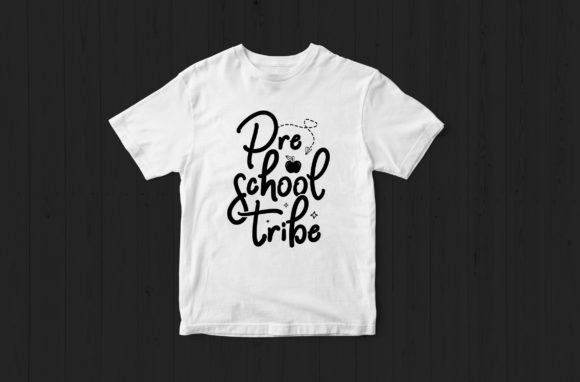
Pre School Tribe SVG Design: A Strategic Creative Asset for Modern Educators and Entrepreneurs
In today’s fast-paced creative economy, educators, small business owners, and digital product designers are no longer just choosing graphics—they’re selecting strategic assets. The Pre School Tribe SVG Design exemplifies this shift: it’s not merely a decorative back-to-school motif, but a versatile, production-ready vector resource engineered for scalability, brand alignment, and cross-platform application. Designed with intention—not just aesthetics—it meets the evolving needs of preschool program directors, boutique stationery creators, print-on-demand entrepreneurs, and early childhood curriculum developers alike.
What Is the Pre School Tribe SVG Design—Beyond the File Format?
The Pre School Tribe SVG Design is a professionally crafted, layered vector illustration built around inclusive, joyful, and developmentally resonant imagery—think stylized animal friends, smiling children holding hands, nature-inspired borders, and warm, accessible typography. Unlike static raster images, its SVG (Scalable Vector Graphics) format ensures crisp rendering at any size—from a 1-inch sticker to a 48-inch classroom banner—without pixelation or quality loss. Paired with EPS and high-resolution PNG files, it delivers production flexibility across both digital and physical mediums.
Crucially, this isn’t clipart repackaged as “SVG.” It’s purpose-built for real-world workflows: paths are optimized for cutting machines (Cricut, Silhouette), layers are named and grouped logically for quick editing in Adobe Illustrator or Inkscape, and color palettes follow WCAG-informed contrast ratios—making it accessible for diverse learners and compliant for educational use. When you download the Pre school tribe Back-to-school design, you’re acquiring a modular creative component—not just a picture, but a reusable system.
Why This Design Fits the Current Creative and Educational Landscape
Three converging trends make the Pre School Tribe SVG Design especially timely:
- Personalization at scale: Parents and educators increasingly expect branded, cohesive learning environments—yet lack time or technical expertise to build them from scratch. A ready-to-use, editable SVG allows a preschool owner to customize colors to match their logo, add their center’s name, and deploy consistent visuals across welcome signs, parent handouts, and social media—all within minutes.
- Rise of micro-entrepreneurship in early education: From Montessori homeschool co-ops to bilingual preschool subscription boxes, niche providers are differentiating through thoughtful design. A distinctive, on-brand visual identity—anchored by a flexible asset like the Pre school tribe Back-to-school design—helps these ventures communicate professionalism, warmth, and pedagogical intentionality without hiring a full-time designer.
- Hybrid learning infrastructure: As hybrid and outdoor-based preschool models grow, physical materials must be durable, adaptable, and easy to reproduce. Vinyl decals for sensory bins, printable flashcards for home learning kits, and iron-on transfers for staff t-shirts all benefit from a single, well-structured vector source file—eliminating version control issues and ensuring visual fidelity across touchpoints.
How Professionals Are Using It—Real Workflows, Not Just Use Cases
Consider Maria, who runs a nature-immersive preschool in Oregon. She used the Pre School Tribe SVG Design to create a set of laminated “Forest Friends” emotion cards for her morning circle time—editing the SVG to replace generic icons with local wildlife (Douglas squirrel, Pacific wren) using simple path manipulation. She then exported the same file as a cut-ready SVG for her Cricut to produce wooden puzzle pieces for fine motor stations.
Meanwhile, James—a freelance educator and content creator—licensed the design to develop a premium printable toolkit: “Back-to-School Readiness Bundle.” He embedded the SVG into Canva templates, adjusted spacing for readability, and added editable text fields for names and dates. Because the original file included transparent backgrounds and non-destructive layers, he preserved scalability while adding pedagogical annotations—turning aesthetic appeal into functional teaching support.
These aren’t hypothetical scenarios. They reflect how modern professionals treat design files as infrastructure: interoperable, extensible, and integrated into larger systems of communication, instruction, and community-building.
Design That Supports Inclusion—Not Just Decoration
The Pre school tribe Back-to-school design intentionally avoids clichéd tropes (e.g., oversized apples, chalkboard motifs) in favor of subtle, culturally responsive cues: varied skin tones represented in balanced proportions, gender-neutral clothing, wheelchair-accessible play structures implied in background elements, and multilingual-ready typography spacing. These choices align with growing expectations—not just from families, but from accreditation bodies and grant funders—who now evaluate visual materials for developmental appropriateness and equity alignment.
Moreover, because the SVG is fully editable, users can localize it responsibly: swapping out seasonal references (e.g., snowflakes → rainbows for year-round programs), adjusting language for dual-immersion classrooms, or simplifying shapes for students with visual processing differences. This adaptability transforms the file from a one-off graphic into an inclusive design scaffold.
Technology Meets Pedagogy: Why Vector Matters in Early Learning Contexts
Vector-based assets like the Pre School Tribe SVG Design intersect directly with two key technological shifts:
- Cutting machine adoption in education: Over 62% of U.S. preschools now own or share access to vinyl cutters or craft machines (National Association for the Education of Young Children, 2023). Teachers use them to create tactile letters, sensory tracing boards, and classroom labels. An SVG file eliminates the need for conversion, reduces material waste, and supports precise, repeatable cuts—critical when producing sets of identical learning tools.
- Cloud-based collaboration: With Google Workspace and Microsoft 365 now standard in early childhood admin suites, editable vector files integrate seamlessly into shared drives. A director can upload the SVG to a team folder; teachers can open it in browser-based editors like Vectr or Gravit Designer; specialists can annotate layers for speech-language goals or OT adaptations—all without licensing barriers or software lock-in.
From Download to Deployment: Practical Integration Tips
To maximize value, professionals should approach the Pre School Tribe SVG Design as part of a broader workflow strategy:
- Start with your brand foundation: Before editing, identify your core color palette and font pairings. Use the SVG’s layer structure to isolate and recolor elements consistently—ensuring your welcome banner matches your newsletter header and student name tags.
- Leverage layer naming: Many SVG files include descriptive layer names (e.g., “MainGroup,” “TextPlaceholder,” “Decoration_Border”). Use these as anchors when scripting batch exports or building automation rules in design tools.
- Test across outputs: Export the same SVG to multiple formats: PNG@300dpi for print, SVG for web embeds, and PDF/X-1a for professional printing. Compare color fidelity, edge sharpness, and loading performance—then adjust global swatches if needed.
- Document modifications: Keep a simple changelog (even in a Notion doc or spreadsheet) noting edits made, date, and intended use case. This builds institutional memory—especially valuable when onboarding new staff or scaling to additional campuses.
A Resource That Grows With Your Mission
The Pre School Tribe SVG Design reflects a broader evolution in how professionals source creative assets: less about “buying art,” more about acquiring operational leverage. It acknowledges that time, consistency, and accessibility are now primary constraints—not just budget. By offering EPS, SVG, and high-resolution PNG in one package, it removes friction between ideation and execution, between pedagogy and production, between vision and visibility.
For entrepreneurs launching preschool-themed merchandise lines, it serves as a foundational motif that maintains integrity across mugs, tote bags, and digital stickers—supporting cohesive brand storytelling. For curriculum designers, it provides a visual grammar that reinforces social-emotional learning objectives without requiring custom illustration for every worksheet. And for educators building trauma-informed spaces, its clean lines, balanced composition, and editable warmth offer a quiet but powerful tool for environmental regulation.
This isn’t just another back-to-school download. It’s a deliberate response to how learning communities actually function today—distributed, adaptive, values-driven, and deeply human. When you choose the Pre school tribe Back-to-school design, you’re choosing clarity over clutter, flexibility over rigidity, and intention over inertia.
Note: Feel free to contact us if you need any corrections—we support iterative refinement because great early learning environments evolve, and your design assets should too.